 Races
Races
Master the heat to boost your endurance and elevate your race performance.
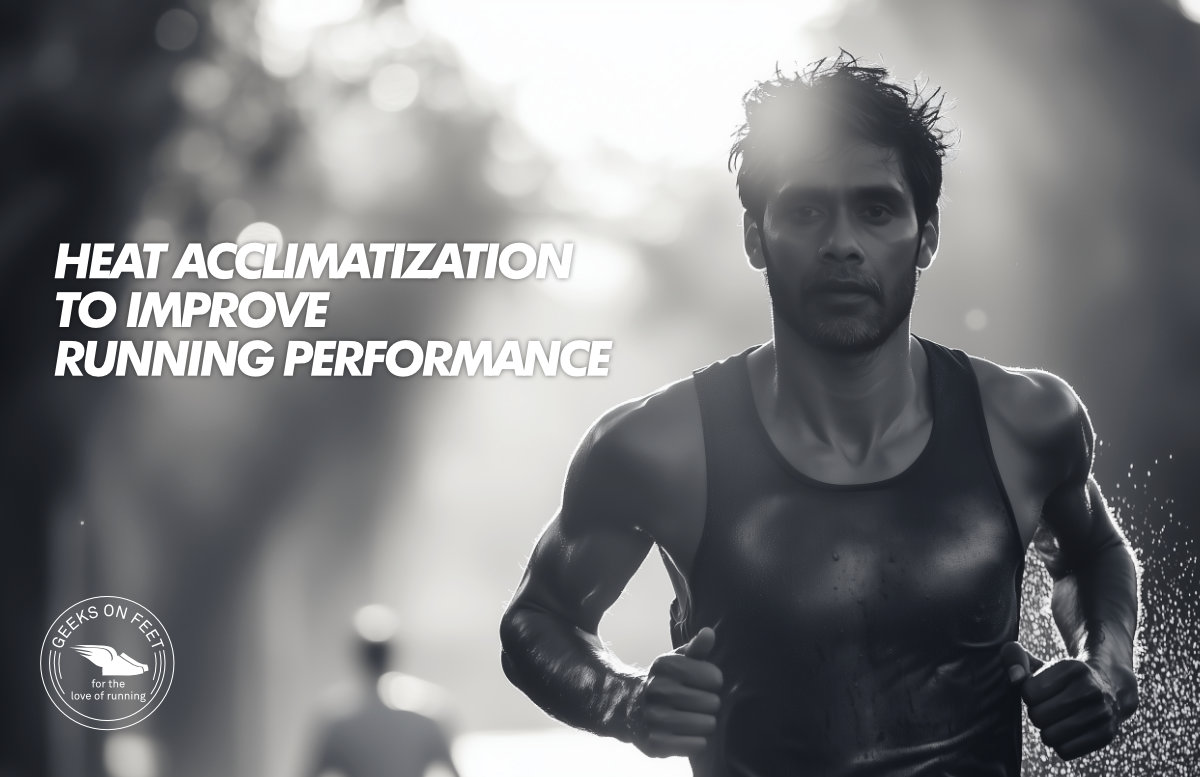
Heat acclimatization is a crucial aspect of training that is often overlooked by many runners. Yet, adapting to hot conditions leads to substantial physiological gains and boosts race performance. Here is a closer look at what heat acclimatization means, its potential benefits, and how to incorporate it into training.
Heat acclimatization is the process of training our bodies to adapt to high temperatures through repeated exposure. In case of running, it involves getting more mileage during the hotter parts of the day, or simulating such conditions artificially.
Though there is no one size fits all approach to this, about 10 days of consecutive exposure is a good starting point, beyond which runners can customize and build their own plans. [1]
Adding heat acclimatization to your training program offers multiple advantages.
Heart efficiency
A reduction in resting and exercising heart rate is observed due to the increased efficiency in blood circulation. The heart’s stroke volume also increases due to the expansion of the plasma volume in the blood - allowing more blood to flow into both muscles and the skin and hence improving running performance.
Better handling of hydration levels
Due to the increased efficiency of losing heat via the skin, heat acclimatization results in a reduction in the sweat rate - preserving the body’s hydration levels and electrolytes.
Increased Cardiovascular Stamina
As a direct consequence of improved heart efficiency and hydration levels, cardiovascular markers such as Time to Exhaustion (TTE), VO2 Max and Lactate Threshold improve as well.
A study conducted by Tyler Et al. [2] measured a 6% increase in VO2 max and 23% improvement in TTE after a two week acclimatization program, which are extremely impressive gains.
The best time for heat acclimatization is immediately prior to a target race. However, exposure to heat over a long period of time (> 2 weeks) leads to the body “remembering” this adaptation for longer times.
To acclimatize to heat, start by gradually exposing yourself to warmer conditions, such as running short distances during hotter parts of the day or in a humid environment. Begin with shorter, low-intensity easy runs and increase duration over 7-14 days, allowing your body to adapt. We suggest not running intervals and other forms of speed workouts. Stay well-hydrated, monitor your effort, and listen to your body to avoid overheating.
A few tips for effective and safe heat acclimatisation are -
Wet Bulb Temperature
When it’s very hot outside, our bodies need a way to cool down. Nature has given us a built-in cooling system: Sweat. Sweat is mostly water, and it cools us because water can absorb and transfer heat very effectively. When we sweat, our body heat is absorbed into the sweat, and as the sweat evaporates, it carries that heat away.
But this cooling system isn’t perfect. Sweat only works if the air around us can absorb the water from our skin. The amount of water the air can hold is called “humidity.” You’ve probably seen humidity measured as a percentage (%). This tells us how much water is in the air compared to how much it can hold. At 100% humidity, the air is completely full of water, so sweat can’t evaporate anymore.
When sweat doesn’t evaporate, it stops cooling us down. In such cases, our body relies on the air temperature to cool us. When weather conditions are both very humid and very hot. In these situations, sweat can’t cool us.
Wet Bulb Temperature above 30 degrees is unsafe for intense activities such as races. Web Bulb Temperature above 35 degrees is fatal even for heat adapted athletes.
In case your local climate never gets this hot, you can simulate such conditions by wearing extra layers while running. However, it is difficult to quantify tolerance thresholds in this case and should be done cautiously based on perceived effort and heart rate.

Sanchit is a software engineer who started running as a hobby and got addicted. If he’s not running, he’s probably thinking about his next run or surfing Strava. He can be reached out on Twitter @sanchit3008 or on Strava at this URL.
We put substantial time and resources into bringing this content to India's running community. If you like what we do, consider chipping in — every bit helps keep the lights on.