 Races
Races
Plyometric training series - Improve power, speed, running economy and form
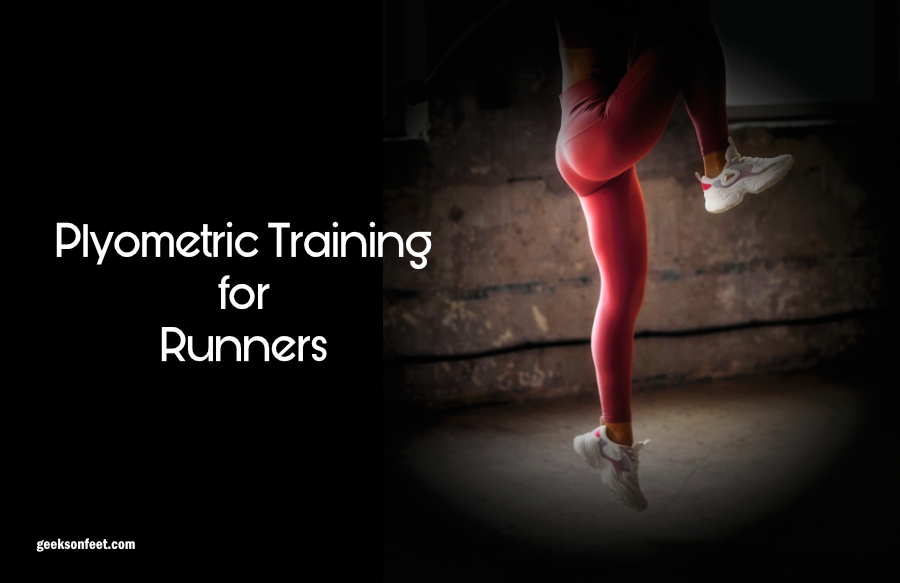
Plyometrics come naturally to all humans, as we learn it in early childhood like - jumps, hops and bounding movements. These movements and activities involve projection of our body’s center of mass either horizontally or vertically by increasing the magnitude and rate of stretch on the muscles. Plyometrics are easily approachable by runners of all levels of expertise, and can be done without no or minimal equipment.
We are collaborating with one of the India’s finest fitness & running coaches, and will be publishing a series of posts on Plyometric training for runners. This first post highlights the what and why of plyometric training. Following this, a series of posts cover integration of plyometric workouts into runners’ training based on their level of expertise and their current conditioning.
Large portion of energy required for running stride comes elastically, by storing the energy when landing, and then releasing it as we push forward. This process is called Stretch Shortening Cycle (SSC). It is the same mechanics behind how a mechanical spring works. When applied to running stride it is commonly called Triple Extension. Triple extension is quick succession of contraction (eccentric phase) and then extension (concentric phase) of muscles, tendons and three joints of lower body hip, knee and ankle (please see the picture below).
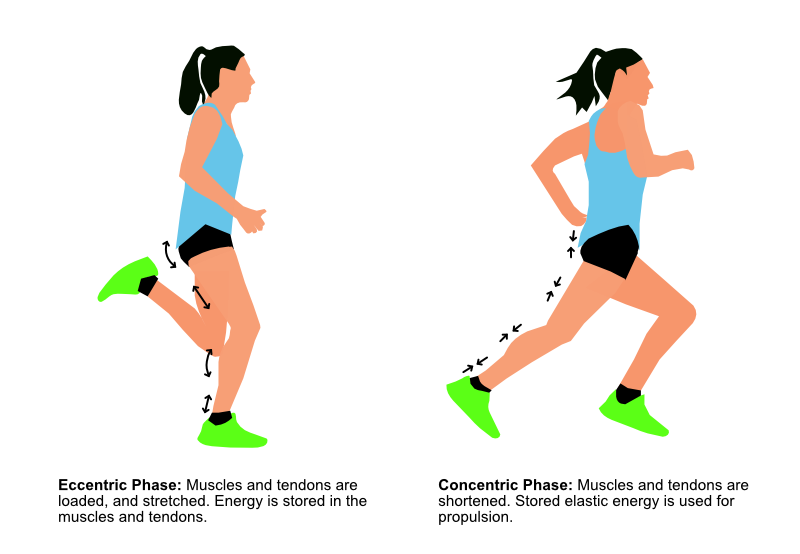
Hence training our muscles to store the energy when landing and then releasing it efficiently is an important part of generating the power required for a powerful stride. Training for SSC also means we can generate higher pace with lesser energy. Such training makes effective use of fast twitch muscles for power and makes the slow twitch muscles do faster concentric movements.
Plyometrics are the best training to improve the triple extension. Plyometrics consists of 3 basic movements
Sprinters know the benefits of Plyometrics and is an important of their training. Long distance runners however rarely include it as part of their training. There are many benefits associated with plyometrics for long distance runners training for 5k and beyond.

Goal of plyometric training is to produce power and force using as many joints as possible. To achieve maximum force production, we need to compress all those springs and then sequentially release that tension, resulting in triple extension. Transferring of momentum from one body part to another, glutes, knees to ankle is an important goal of plyometric training.
Contextualizing Plyometric training based on where a runner is in their fitness journey is important to ensure its effectiveness and to prevent injuries. Progression of plyometric training starts with better landing. This is followed by improving balance and stability. Then follows improving the vertical displacement and short ground contact time.
Coming up next..
In the next set of posts in this series, we will cover
Compiled by Team GeeksOnFeet for the love of running
If you are a running enthusiast, follow us on our social media channels @geeksonfeet on Twitter, and GeeksOnFeet on Instagram and Facebook for updates.
We put substantial time and resources into bringing this content to India's running community. If you like what we do, consider chipping in — every bit helps keep the lights on.