 Races
Races
Prevent overtraining and optimize training using RPE scale
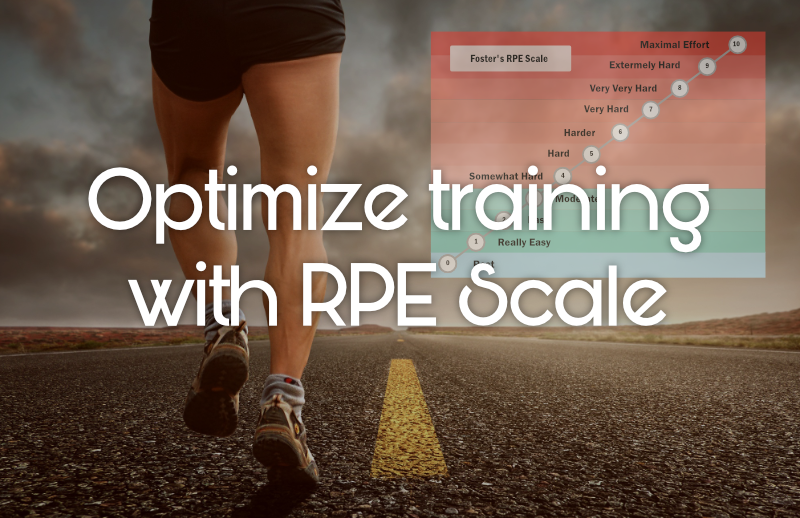
Training intensity and load is an important aspect of how we get the necessary stimulus required to perform better. Structured training involves increasing the training load on a periodic basis (called Periodization).
Periodization is normally done in weekly cycles called Macro and Mesocycles.
Importantly, there will be easier recovery weeks, allowing runners to recover from the stress and ready for the next mesocycle.
It is often a misconception that more training is better for performance. In reality, overtraining could impair performance. When there is imbalance between training stress and recovery, it leads to:
It is important to note that stress can also come from sources other than training load. Work, infections, lack of sleep, and other life activities add to stress which often is not considered in training cycles.
As runners we use a variety of recovery strategies including body massages, nutrition, cold baths and more. While these strategies are important, these are reactive. Addressing excessive stress right while training is key to avoid overtraining.


There are a variety of metrics that can be used to train at the right intensity. Some of the common mechanics runners use to understand training intensity are:
While these metrics can possibly ensure we are training at the right intensity, these’t can capture the stress the athlete actually feels.
Surprisingly our brain is the answer to training at the right intensity. Using our brain to rate how we feel during training, called Rating of Perceived Exertion (RPE) is widely accepted as an effective tool to adjust training intensity.
Sports scientist Professor Ross Tucker describes RPE, as a conscious/verbal manifestation of the integration of psychological and physiological cues. It has been observed that our effort on RPE scale climbs gradually as the body temperature increases or carbohydrate stores decrease. RPE is also how we pace ourselves in races. When we are unable to maintain pace, it is because of the mismatch between our brain’s expected and actual effort for a given pace, not because of hitting a physical limit.
One of the popular RPE scales is Forster’s RPE scale. It is a simple scale of 0-10, and we rate our perceived effort using the cues provided on the scale.
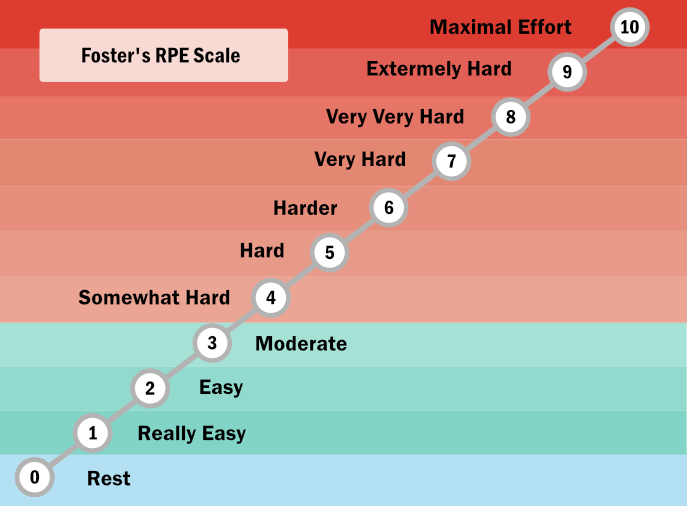
Using RPE for adjusting intensity during a training cycle is fairly low tech, but is very effective.
Adding up the Training Load numbers over weeks and and across a cycle gives the overall training load. Training load numbers then can be compared from week to week, and cycle to cycle to against training objective to understand if there is monotony and overtraining.
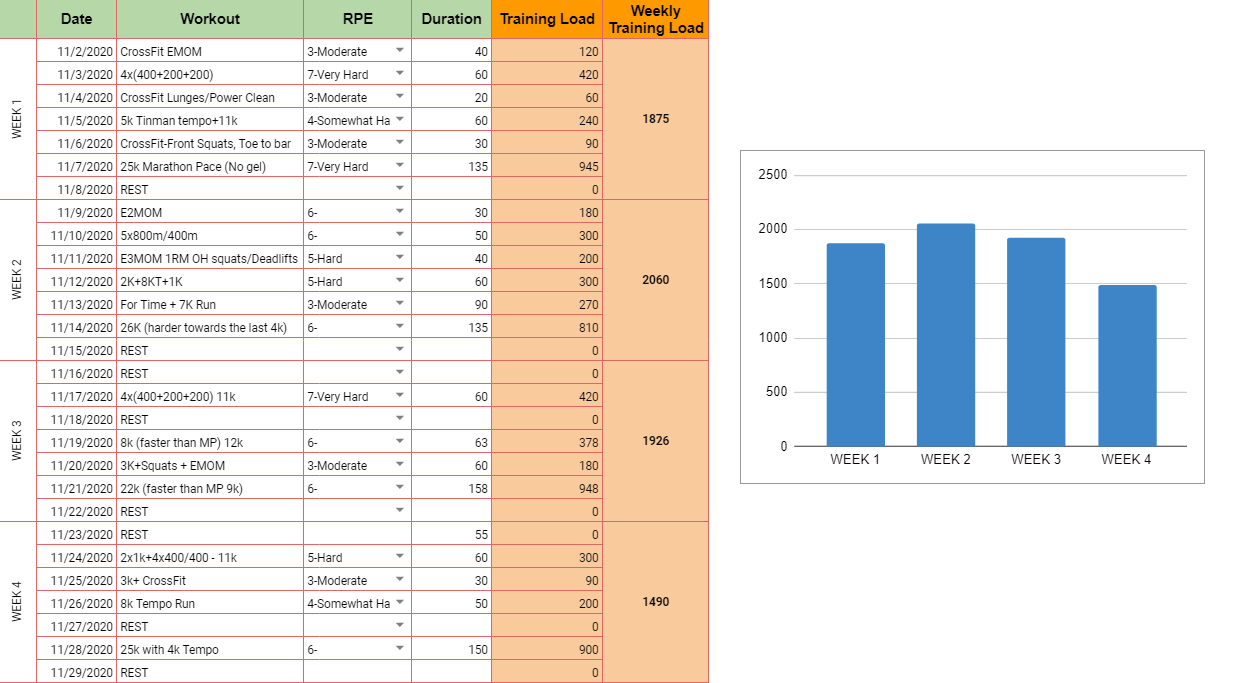
Here is a sample trainig log to show how RPE can be used. Each workout in the log is marked with RPE and the duration. Duration is multiplied by RPE to get the training load for a given session. The training load is summed up for each week. Bar chart shows how the training load varies with each week from hard to easy.
Please check this video from Coach Ron George to understand more about how RPE can be used to manage training load
Compiled by Team GeeksOnFeet for the love of running
If you are a running enthusiast, follow us on our social media channels @geeksonfeet on Twitter, and GeeksOnFeet on Instagram and Facebook for updates.
We put substantial time and resources into bringing this content to India's running community. If you like what we do, consider chipping in — every bit helps keep the lights on.